- Remove Plugins Mac
- Java 1.6 Plugin Download
- Download Plugin To Launch Java In Macbook Pro
- Free Mac Plugins
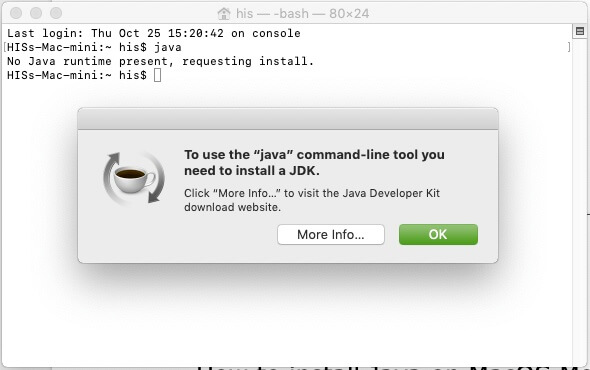
The next generation Java Plug-in (introduced in Java SE 6 update 10), needs to be enabled in order to view applets that leverage features of this Java Plug-in. The next generation Java Plug-in is not enabled by default on Mac OS systems. So here are a few tips to enable the plug-in. Upgrade to a 6u17 based Java update. Go to Java verification page to be sure that it’s running. Press a button and browser will ask you to allow Java: Then it will ask you: “do you really want to run Java detection application?”. And at the end, it will say that your current Java version is 8 Update 151. That means, Java is running and you can use whatever.
This page tells you how to download and install Java 8 and Eclipse on Mac OS X, and how to configure Eclipse.
Installing Java 8
Go to the Oracle website. You'll see something like this:
Scroll down until you see a heading beginning 'Java SE 8u65/8u66.' On the right, you'll see a Download button under the JDK header. Click it. The next screen will look like this:
Click the radio button next to 'Accept License Agreement' and then click on jdk-8u65-macosx-x64.dmg. You'll be asked whether to save the file that is going to be downloaded; click on Save File.
Open your Downloads folder, and double-click on jdk-8u65-macosx-x64.dmg. You'll see this window:
Double-click on the package icon, and follow the instructions to install. When the installation has completed, click on Done. At this point, you may close up the window and drag jdk-8u65-macosx-x64.dmg to the Trash.
Installing Eclipse
If you already have Eclipse installed on your Mac, you need to get rid of it. To do so, first quit Eclipse if you're currently running it. Then, go to your workspace folder (probably in Documents/workspace) and save anything there that you want to keep, because you're about to get rid of this folder. Next, drag the workspace folder to the Trash.
Go to your Applications folder. One way to get there is, from the Finder, type command-shift-A. You'll a folder named eclipse in there; drag the eclipse folder to the Trash. If you have an Eclipse icon in your dock, remove it from the dock.
Now you're ready to download and install the newest version of Eclipse. Go to this website. You'll see a window like this:
Scroll down until you see 'Eclipse IDE for Java Developers' and click where it says 64 bit under Mac OS X.
You will see this window:
Click on the yellow download button. If asked, click on 'Open with Archive Utility (default)' and then click OK. The download might take a few minutes. You should not feel compelled to donate.
After the download completes, folders should automatically expand. If they don't, double-click on the .tar file. When that's done, you should see a folder named eclipse in your Downloads folder. When you open your Downloads folder, if you see Applications under the Favorites on the left side of the window, you should drag the eclipse folder into Applications. If you don't see Applications, then open a new window for Applications (from the Finder, command-shift-A), and drag the eclipse folder into Applications.
Open your Applications folder, and then open the eclipse folder. You'll see an item named Eclipse; if you like, drag its icon into the dock so that you'll be able to launch Eclipse easily.
Launch Eclipse. If you're asked whether you want to open it, of course you do; click Open. You'll see a window like this:
It will have your user name rather than mine (scot). Select where you want your workspace to be; I recommend the default of your Documents folder. Click the checkbox for using this location as the default, and then click OK.
You'll see a window like this:
Click on the Workbench arrow in the upper right that I've circled. You shouldn't see this screen again, even if you quit Eclipse and relaunch it.
You'll get an empty workbench like this:
We won't be using the 'Task List' and 'Connect Mylyn' windows. Click the 'x' on each to close it. Press the mouse on the Window menu item, then choose 'Perspective', and finally choose 'Save Perspective as..'. Enter 'cs10' for the name of this perspective and press return. Your workbench will now look like this:
You have now installed Eclipse!
Configuring Eclipse
You don't have to configure Eclipse the way I do, but you'll probably avoid some confusion if you do. Here's how.
In the Eclipse menu bar, click on the Eclipse menu and then on 'Preferences..'. You'll see a window with two panes. On the left pane is a list of types of things you can configure.
Click on the triangle to the left of General. Then click on the triangle to the left of Appearance. Then click on 'Colors and Fonts.' You should see a window like this:
In the window in the middle, click on the triangle next to Java. Then double-click on 'Java Editor Text Font':
You'll see this window:
On the right, where you can select the size, click 12. Then close this window by clicking on the window's close button.
Close up the General preferences by clicking on the triangle to the left of General. Click the triangle next to Java and then click the triangle next to 'Code Style.' Then click Formatter. Here's what you should see:
Click the button that says 'New..'. You'll see a window such as this one:
You can type in any profile name you like. I used 'CS 10':
Click OK.
You should see a window like this:
Change the tab size to 2:
You'll see that the indentation size automatically changes as well.
Click on 'Blank Lines,' and after 'Between import groups' and 'Before declarations of the same kind,' change the values 1 to 0:
Click on 'Control Statements,' and check the first four boxes as I've done here:
Click OK.
Now click on triangles to close up Java. Click on the triangle next to Run/Debug, and then click on Console:
Click on the green color sample next to 'Standard In text color.' You'll get a color picker:
Slide the slider on the right down, so that you get a dark green. (You're at Dartmouth. What other color could you possibly want?)
Close the color picker window by clicking its close button, and click OK again to close the Preferences window.
And you're done!
Most computer users have heard of the Java programming language because it will be installed on a lot of machines and required on some websites. One good thing about Java is it’s cross platform and runs in it’s own self contained virtual machine, meaning the same applets and programs can be run on different operating systems such as Windows, Linux and Mac OS without using different code.
Some users claim it slows their computer down because of the extra processes loading with Windows such as the Quick Starter process jqs.exe. One thing a Java install does do which annoys a lot of people is leave the previous versions in place to supposedly help with compatibility. The small utility JavaRa was designed to help clean out any old installation files. Exploits do appear from time to time which can potentially allow malware to be installed onto a computer if the user clicks the Yes button when visiting a website created by a hacker, but these exploits are rare and fixed pretty quickly.
Although the Java Runtime Environment (JRE) package requires installation and there is no official portable version, it is still possible to run applets and applications without installing Java into Windows. An unofficial portable version from PortableApps.com allows you to copy Java to your USB flash drive or hard drive folder and run it from there. Here’s a guide on how to do that.
1. First insert a USB flash drive into your computer. For this example the letter of our USB flash drive is the F: drive. Obviously substitute F: for your own drive letter.2. Download Java Portable from PortableApps.com. Once finished downloading, run the downloaded executable file and click OK -> Next -> I Agree and then you’re asked to choose an install location. By default the destination folder will show {path}CommonFilesJava, add F: at the front so that it becomes F:CommonFilesJava and click the Install button. The latest Java installer will download which is currently around 30MB.
3. When the Portable setup has finished, download and run the PortableApps.com jPortable Launcher tool which is a small program that can execute Java .JAR files. During the install take note of the destination folder again. Add F: in front so that the destination folder becomes F:JavaPortableLauncher and click the Install button.
4. To run a Java applet or application, open the F: drive and execute the F:JavaPortableLauncherJavaPortableLauncher.exe file which will open a file dialog asking you to select the .JAR file of the applet or program you want to run. If you are getting a “jPortable Launcher cannot be started…” error, it means that you installed Java Portable at the wrong location in step 2. Make sure that it is installed in {drive:}CommonFilesJava.
You cannot use this method with currently installed software that requires Java to function like LibreOffice or jDownloader or Java applets in web browsers. If you try to open a webpage in an installed browser which requires Java then you’ll just be told it needs to be installed. The torrent client Vuze/Azureus did at least ask for the location of the Java files on install and worked using the portable Java.
The good thing is PortableApps.com have made this version of Java compatible with their portable applications that require or use Java such as LibreOffice or Firefox. Just make sure to have CommonFiles in the same folder as the portable application folder, e.g; F:folder1CommonFilesJava and F:folder1FirefoxPortable.
The hugely popular download manager jDownloader is programmed in Java and will obviously need a Java runtime installation to work. Although not officially available at PortableApps.com, it can easily be used in a portable way with the above method. Simply download the MultiOS zip file from “Other” on the jDownloader download page and extract it to your USB flash drive or hard drive folder. Now simply launch JavaPortableLauncher and locate the jDownloader.jar file.

To launch jDownloader directly from a shortcut so you don’t need to open the JAR file manually every time requires a few extra steps, you need to:
1. Copy the contents of the JavaPortableLauncher folder to the jDownloader folder.
2. Create a shortcut of JavaPortableLauncher.exe, right click on the shortcut -> Properties, then append “jDownloader.jar” in the Target box. Create the shortcut AFTER copying the jDownloader folder to its final location or the paths in the shortcut will be incorrect.
The CommonFiles folder HAS to be one folder level up from where you have placed the JavaPortableLauncher.exe. For example, if you have:
“D:Portable ToolsjDownloaderjDownloaderJavaPortableLauncher.exe”
The CommonFiles folder will be:
“D:Portable ToolsjDownloaderCommonFiles”
Using this method you can have a portable jDownloader folder with Java included which can be placed in any hard drive folder or external USB drive. Obviously you can do this with many other Java based applications not just jDownloader.
You might also like:
How to Enable Adobe Flash Support in Firefox and Opera PortableRun an Installed Firefox Browser Together with Firefox Portable Versions5 Free and Portable Microsoft Office Alternatives3 Application Launchers with Automated Portable Software Installation SystemCleaning Up Old Java Installation Files in Windowsreplaced 1 installation by another …. wow.
Even though it could be tolerated as a means to an end, I dont trust that the jlauncher works as desired, because the his developer does not appreciate the portable concept for his own creations.
Ray, great stuff. never saw your sight till the last year,but seems every 4th thing i search,you have a solution lately.well done.,you should start a BLOG(joking),great stuff,the right solutions,riight tools,right content,that actually solve something useful.
Great STUFF.
THANK YOU for taking the time.
ReplyIt is possible to do it with DocFetcher? There is no DocFetcher.jar, just DocFetcher.exe…
ReplyRemove Plugins Mac
Much easier with DocFetcher. All you have to do is download java port and place it in the same folder as doc fetcher. Then:
2º) Move docFetcher.bat from the “misc” folder one level up into the DocFetcher folder.
3º) Edit docFetcher.bat and add the path where your portable java is located. Let’s say its in E:BUSQUEDASDocFetcher-1.1.12Javabinjava, you have to replace “java” in
java -enableassertions -Xmx512m -Xss2m -cp %libclasspath% -Djava.library.path=lib net.sourceforge.docfetcher.Main %1 %2 %3 %4 %5 %6 %7 %8 %9
by your path. So the result would be:
E:BUSQUEDASDocFetcher-1.1.12Javabinjava -enableassertions -Xmx512m -Xss2m -cp %libclasspath% -Djava.library.path=lib net.sourceforge.docfetcher.Main %1 %2 %3 %4 %5 %6 %7 %8 %9
4º) Double click the docFetcher.bat to launch docFetcher.
Now you can go a bit further an convert the bat to an exe so you can give it an icon and pin it to the task bar
.
For one solid week I’ve been trying to java and netbeans portable to run from my flashdrive. Is this possible if the host computer doesn’t have a specific version of java or java installed at all. How would one does this successfully? Do I need to specific version of portable netbeans? because I found portable netbeans 8.0 but I need help…everytime I try to run netbeans it comes up with “Cannot locate java installation in specific jdkhome: D:Portable AppsNetBeans_JavaSE_8.0_PortableAppjdk”
Do you want to try to use the default version?
And then it says “Cannot find Java 1.7 or higher”
I’m very confused, can someone please help me?
Thanks for this Ray. ;)
Reply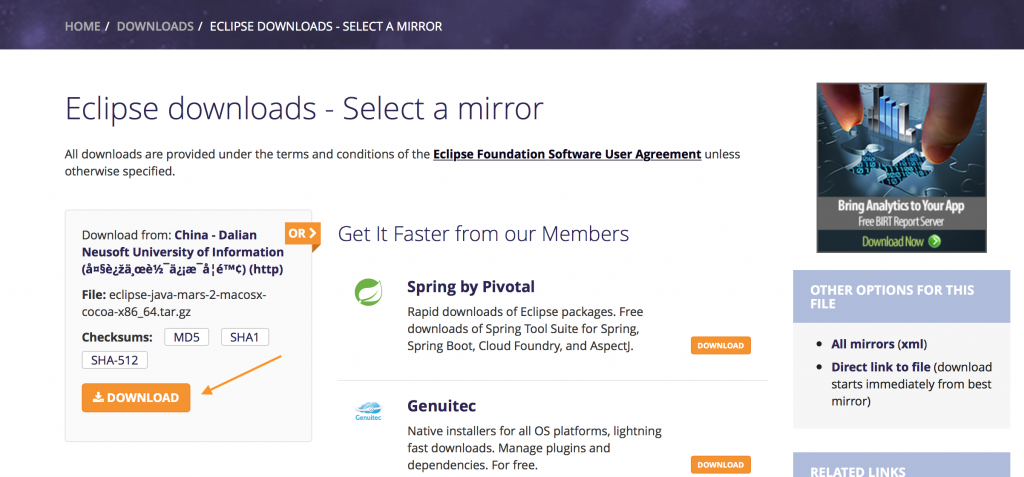
Java 1.6 Plugin Download
Thanks, now I got an idea of deploying Java application to all my desktop remotely.
ReplyGood one Ray!!
Thanks for the info…