Conveyor allows you to easily test web applications from external computers, tablets & phones on your network and over the internet through tunnelling.
Conveyor also fixes the 400 Bad Request error from IIS Express when you try to access using non localhost.
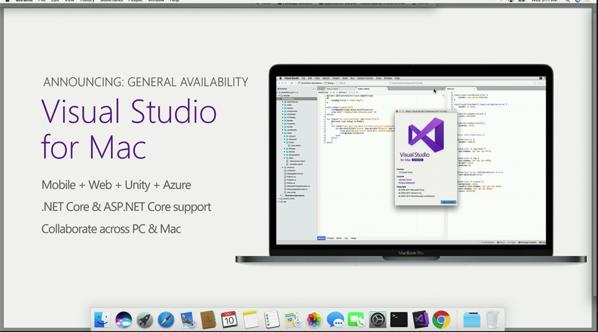
Free downloads for building and running.NET apps on Linux, macOS, and Windows. Runtimes, SDKs, and developer packs for.NET Framework,.NET Core, and ASP.NET. Click the button to download the latest version of Visual Studio 2017 for Mac. For instructions on setup and install, see the Setup and Install Visual Studio for Mac documentation. To learn more about Visual Studio 2017 for Mac, see Mac System Requirements and Mac Platform Targeting and Compatibility.
Step 1:
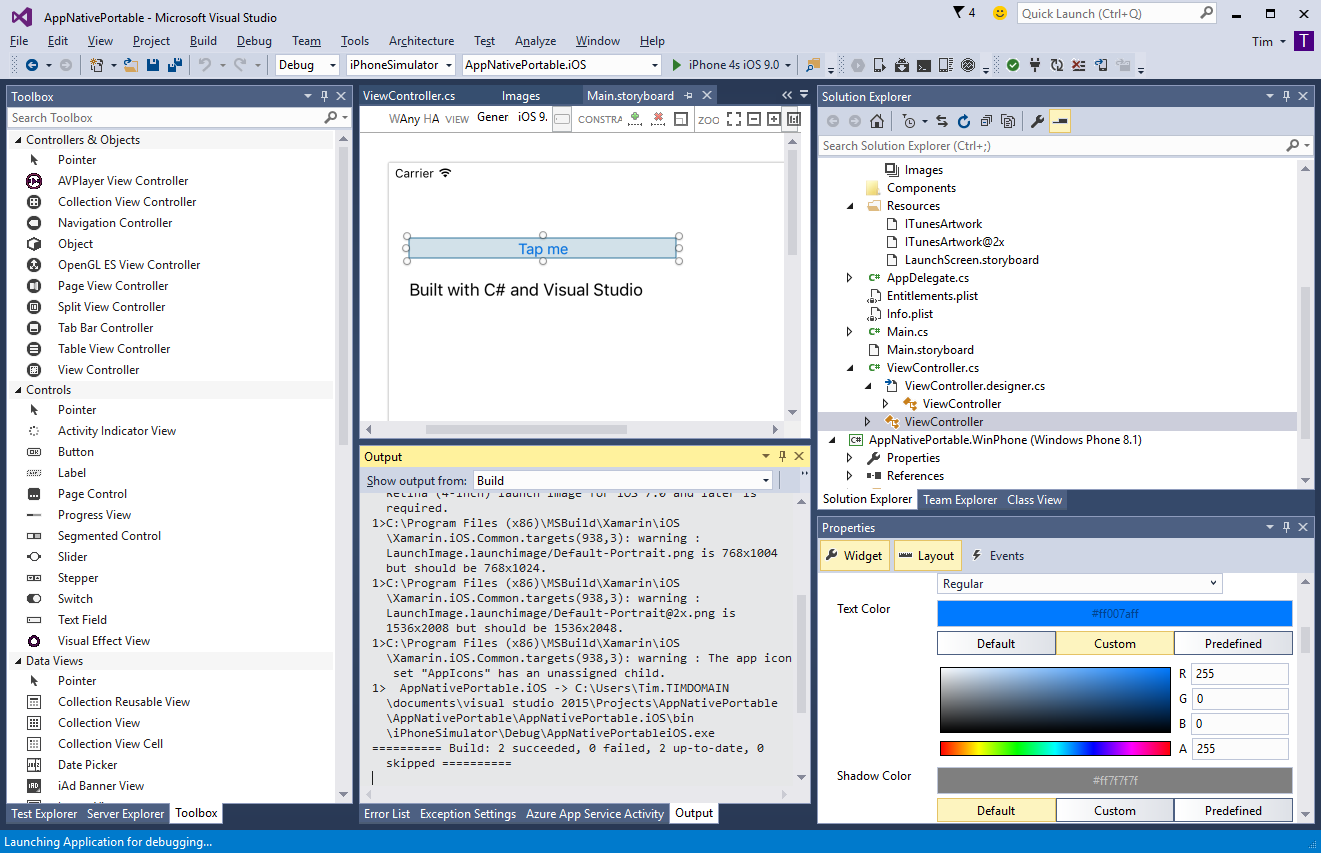
Download the Visual Studio Extension by searching for 'Conveyor' in the Extensions dialog (Online category).
Step 2:
After you restart Visual Studio, Conveyor will check your firewall ports and open a helper application if needed, or advise what changes need to be made (see below for manual instructions).
Allow the application to run and click 'Apply Rules Automatically' if you agree to the changes (Visual Studio must not be blocked and ports 45455-45500 need to be open).
Step 3:
Conveyor is automatically enabled for web application projects, run (debug) a project and note the Remote URL, that is the URL you will use from your device or other computer. Please see troubleshooting below if you don't see the Conveyor window.
Step 4:
Use the Remote URL from your device (phone, tablet or other machine) to directly access your application. Note that you must be running the project in Visual Studio for the Remote URL and Internet URL to work.
TLS/SSL
The 'Access over internet' tunnel service has it's own properly trusted certificate, so no setup is necessary. However, the Remote URL (for access over the LAN) runs with a self-signed certificate. To properly access the Remote URL from other machines/devices you just need to install Conveyor's CA certificate on your device, please click the certificate icon in the URL grid for instructions.
Manually configuring your firewall
Add an inbound firewall rule allowing access to the TCP port given in the Remote URL.
- Open Windows 'Start' and type WF.msc.
- Click 'Inbound Rules' on the left.
- Click 'New Rules' on the right.
- Choose 'Port' in the new dialog, then 'Next'.
- Select TCP, and enter the port from the Remote URL next to 'Specific local ports' (45455-45500), then 'Next'.
- Next, and next (you may want to disable 'Public'), give it a name like 'Conveyor: web dev server access enabled'.
Troubleshooting
- Cannot enable: If you have installed Conveyor previously and it is now disabled, please see https://stackoverflow.com/questions/35203647/updating-visual-studio-2015-extensions-end-up-disabled you can get the tool mentioned, here https://github.com/remcoros/DuplicateExtensionFinder/releases/download/v1.2/DuplicateExtensionFinder.exe and run it with 'DuplicateExtensionFinder.exe -delete'
- Cannot enable (administrator usage): If running VS as administrator, and Conveyor isn't enabled (the Tools menu item is deactivated) you will need to go to 'Tools | Options | Environment | Extensions and Updates' and check 'Load per user extensions when running as administrator'.
- Invisible tool window: If the Conveyor window doesn't appear, please restart Visual Studio and try running the project again (if it still won't work, resetting your VS settings should fix it Tools->Import and Export Settings Wizard->Reset all settings->select “No, just reset settings, overwriting my current settings”->Choose a Default Collection of settings).
- Closed the window: You can reopen the Conveyor window by going to Tools->Conveyor to disable it, and then repeat to re-enable it - the next time you run the project the Conveyor window should appear.
- SSL: The first time you run a project using HTTPS you will be prompted to install our testing certificate, this is normal and you should allow it for more stream-lined experience (otherwise you'll be warned by the browser not to visit your web app).
- IP address: If connections to the remote URL provided by Conveyor do not work (eg timeout), please try using a different IP address for your machine (use CMD and type ipconfig to see IP addresses), also ensure you have opened the port on your local firewall.
- Android emulator: If you cannot connect to the remote URL from an Android emulator then please try using the IP 10.0.2.2 with the Conveyor provided port number, eg. https://10.0.2.2:45455/
- Firewall: Check there are no BLOCK firewall rules that are overriding your ALLOW rule. By default, BLOCK overrides. Also check that access to Visual Studio isn't blocked.
- No response: Make sure the project is running in Visual Studio
- Windows 7: You need to enable TLS 1.2 please see https://help.runbox.com/enabling-tls-1-2-on-windows-7/
- If Conveyor cannot find any web projects (when you run the project), please send a screen shot of your solution structure to support@conveyor.cloud so we can investigate.
Technical support and more information is available at the Conveyor home page
Hands On Microsoft this week opened the gates on Visual Studio for Mac 2019 8.3, a flexible development environment for .NET, and The Reg can give you the lowdown on some of the new features.
But first, let's see how the Microsofties got here. Redmond has three coding tools under the Visual Studio brand, all of which have different ancestries.

Visual Studio on Windows supports development not only in .NET languages but also C++, Python, JavaScript and Node.js, and cross-platform mobile development using Xamarin, Apache Cordova or C++. Depending on which edition you have, you also get SQL Server database tools, test and coverage frameworks, Microsoft Office and SharePoint development, R for data science work, built-in Docker tools and more.
Xamarin is a cross-platform .NET framework designed mainly for iOS and Android, but also with support for macOS applications. A confusing thing is that Xamarin does not use .NET Core, though it does support the .NET Standard 2.1 specification in its latest version. See here for guidance.
Xamarin evolved from the open-source Mono framework, an implementation of .NET for Windows and Linux. Mono had its own IDE, called MonoDevelop, which unlike Visual Studio was originally written entirely in C#. Xamarin adapted MonoDevelop to become Xamarin Studio. When Microsoft acquired Xamarin in 2016, Xamarin Studio became a Mac-only IDE and was renamed Visual Studio for Mac. You can still get MonoDevelop for Mac, Windows and Linux, though the Mac download is now Visual Studio for Mac, and on Windows you have to build it from source.
Visual Studio Code (VS Code) is a cross-platform editor built with the Electron framework, using Node.js and the Chromium browser engine Blink. VS Code was first previewed in 2015 and has been a remarkable success, now ranking as the top development environment on the popular coding Q&A site StackOverflow by a huge margin. Although lightweight in comparison to Visual Studio, VS Code straddles the boundary between an editor and an IDE, with debugging support and a rich range of extensions.
Following the acquisition, Microsoft has been working on sharing some of its Visual Studio for Windows technology with the Mac version. This goes alongside the development of the cross-platform .NET Core, which has allowed code sharing between Mono and .NET Core, though Mono has not been completely replaced. It is still the case that Visual Studio for the Mac is a very different thing from Visual Studio for Windows.
What can Visual Studio for Mac do?
VS Mac is primarily for Xamarin development. The majority of Xamarin developers code applications for iOS and Android, and there are two different approaches to this.
Xamarin.iOS and Xamarin.Android let you write non-visual code in C# while using native tools to build the UI, Xcode for iOS or a built-in Android designer for Android.
Xamarin Forms is a cross-platform GUI framework. You design the user interface with XAML and build for your chosen target platforms.
Visual Studio Mac Download
You can also go beyond iOS and Android. Xamarin.Mac is for Cocoa applications and uses a similar model to Xamarin.iOS. Xamarin Forms can also target Windows UWP (Universal Windows Platform) and, in preview, macOS.
There is also steadily improving support for games development with Unity.
A glance at the Xamarin forums gives a crude guide to usage. Xamarin Forms has more than double the activity of any other section (over 51,000 threads). Xamarin.Android 34,000, Xamarin.iOS 21,000, and relatively low activity elsewhere – 343 threads for Xamarin.Mac, for example.
Xamarin Forms Mac support seems to be moribund; it was announced in 2017 but the platform status here was last updated in May 2018 and remains incomplete.
Visual Studio for the Mac also supports ASP.NET Core development using Razor, Angular or React.js, and serverless with Azure Functions.
Under the Vulture's Claw
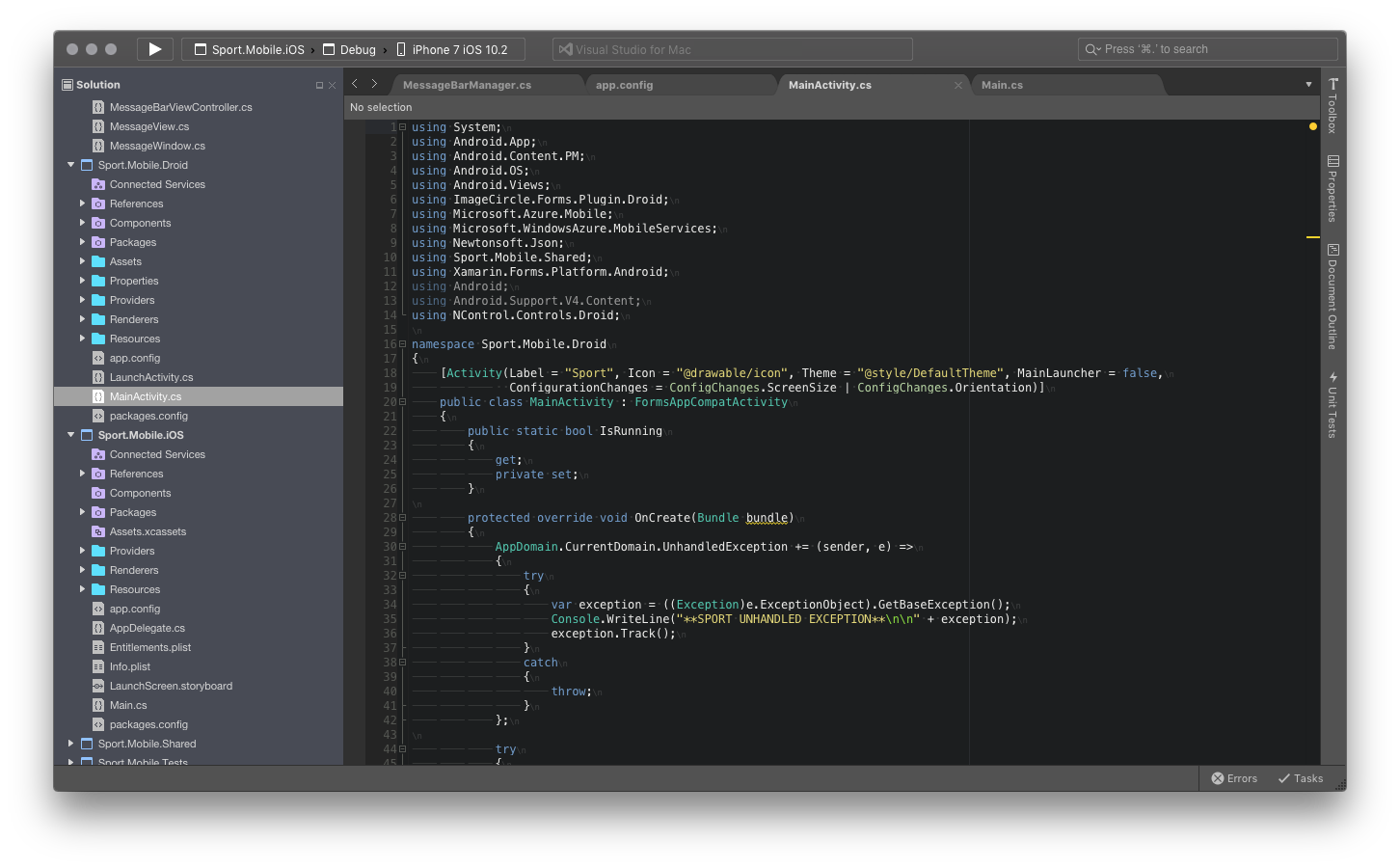
A cross-platform Xamarin Forms app running on iOS and Android
I am having almost this exact same issue, I have an old MacBook Pro that I have previously had El Capitan installed on. The hard drive has gone funny and now I need to re-install El Capitan. But the only other Mac I have is an iMac, and I cannot seem to legitimately find a way to download El Capitan. Macbook pro os x el capitan download. Download mac os x el capitan for free. System Tools downloads - Apple Mac OS X El Capitan by and many more programs are available for instant and free download. MacBook Pro and MacBook Air users to manage PDF files., including Mac OS X 10.11 El Capitan.
We installed VS Mac on a 2018 Mac Mini. The installer pulls down the Android SDK for you, but you have to install Xcode separately. All straightforward, but there is a puzzle about .NET Core. Version 3.0 is installed automatically, and you can create ASP.NET Core apps, but when you go to create a mobile app, the option to create an ASP.NET Core API back end is disabled because it 'requires an ASP.NET Core installation'.
The look and feel of the IDE is different from Visual Studio on Windows, as you would expect from the product history. It feels more basic and less refined, and has only a fraction of the features of its similarly named cousin.
There is no visual designer for Xamarin Forms, but there is a visual preview. Unfortunately, this did not work for iOS on our very simple demo app, showing instead a MonoTouch exception message. But the app itself worked fine on both Android and iOS. The IDE did crash once or twice but with no loss of work.
Another experiment was to create a Xamarin.Mac application and edit the generated storyboard, which defines the user interface using Xcode. This worked perfectly.
What's new?
VS Mac 8.3 supports .NET Core 3 and C# 8.0, and Xamarin now supports Android 10, Xcode 11 and iOS 13.
One of the big new features, though in preview, is XAML hot reload in Xamarin Forms. This lets you amend the XAML file defining your UI, save it, and see the changes instantly in the app running on an emulator or device.
The Visual Studio Mac native editor shares code with Visual Studio on Windows
The C# editor in VS Mac was rewritten by the Visual Studio team after the Microsoft acquisition. It now has what Microsoft calls a 'fully native UI', raising the interesting question of how much of the old MonoDevelop code, which used cross-platform Gtk#, remains in VS Mac. The new native editor was fully released in July, but VS Mac 8.3 now supports web editing (JavaScript, TypeScript, HTML, CSS and more). This lets Microsoft share more features between Visual Studio on Windows and VS Mac, including improved IntelliSense. You also get proper bidirectional text support and a natty feature called multi-caret editing that lets you overtype multiple regions of selected text simultaneously.
There is a new dialog for the NuGet package manager, but care is needed because not all NuGet packages will work on the Mac.
These are highlights; the full list of what's new is here. Download td studio mac download.
Visual Studio Community For Mac Download

Visual Studio 2013 Mac Download
Observations
Microsoft has two successful Visual Studio development tools, and then there is VS Mac, which is important only for Mac-based Xamarin developers. Xamarin.Mac and Xamarin Forms targeting macOS are both interesting for .NET developers wondering how to get their Windows apps onto a Mac, but both are neglected relative to iOS and Android. If you want to develop for ASP.NET Core you would be better off with Visual Studio on Windows, and probably better off with VS Code with its much larger community and rich extension support. Strategically, it might make sense for Microsoft to invest in making VS Code more useful for Xamarin developers. All that said, VS Mac is substantially improved and the price is right: even the free Community edition is a capable tool. ®