When I first start up, or when I reset my cable modem and router, I'll have 20-50ms ping with 50+MBps download speeds (more than what my internet provider promises, actually). After about 5 minutes, the internet quality degrades to 400-600 (or slower) ms ping with under 1MBps download speed.
- I have recently upgraded my internet service to Gigabit speed. On the other PC's on my network I get download speeds of up to 940 Mbps. I use Cat 6 cabling for all devices connected directly to the Cable modem ports. For some reason my HP 300-019 mini desktop only gets around half of this speed. Usually it comes in around 400 Mbps.
- The Ethernet capabilities - 10Base-T, 10/100Base-T, Gigabit - of each Apple Mac with complete specs a click away. Includes production dates, processor type, memory info, hard drive details, estimated retail prices, and more.
Fix any Wi-Fi problem
There are few things more frustrating than an internet connection that’s very slow. Thankfully, there’s a great deal you can do to troubleshoot the problem and speed up your connection. Here’s how to do it.
Why is my download speed so slow?
Internet speed is measured by how much data per second can be downloaded and uploaded. It totally depends on your Internet use, but the processes like uploading large files and video conferencing require decent speed.
Tools for instant downloads
Get a set of superb Mac apps that help you download faster. Best utilities in one pack, give it a try!
So what is a fast download speed? Normally, anything that’s above 100 Mbps is considered good Internet. This means, your Mac will handle multiple simultaneous online activities without major interruptions. Still, there’s no limit to perfection. If you want to reach the optimal speed to make downloads faster, there are a couple of things you can try.
First, you need to find out whether the slow download speed is due to your broadband connection or your wireless network. Since your wireless network is the bit over which you have control, you should check that first. In any case, optimizing and fine tuning your home or office wifi will improve performance.
How to increase Internet speed
Firstly, look at where your router is situated. Ideally, it should be in the centre of your house, so that every room gets a good signal. It should be away from walls, the floor and the ceiling as much as possible. And keep it away from metal furniture, which will reflect radio waves rather than allow them to pass through. Modern routers support both 5GHz and 2.4GHz networks. The latter allows for faster speeds, but the former suffers from less interference from other devices like microwave ovens and cordless telephones. So connect to the 5GHz network on devices that support it. If you have devices that only support 2.4GHz, place your router away from appliances like a microwave or cordless phone.
Here are a few simple steps you can take to improve your Internet speed:
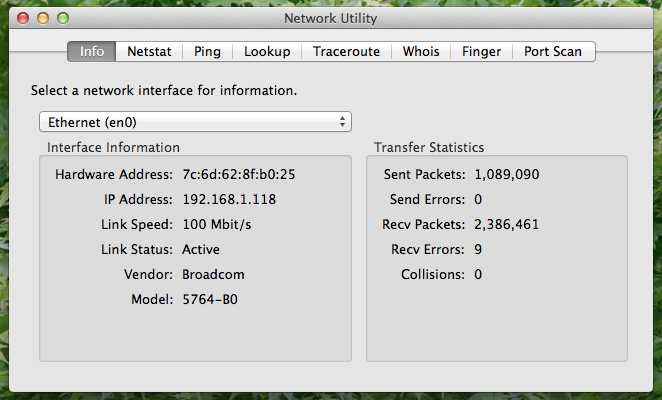
Analyze your Internet speed. For a quick check of current speed, find and access Network Utility via Spotlight. Select your WiFi connection under the Info tab, and check Link Speed. The tools like NetSpot ot WiFi Explorer will help you automate WiFi monitoring as well as track factors that impact Internet speed.
Replace old cables. Ensure all your cables are in good condition. Clean dusty cables, replace those that are too loose or damaged, and double check whether the cables you use fit your network environment.
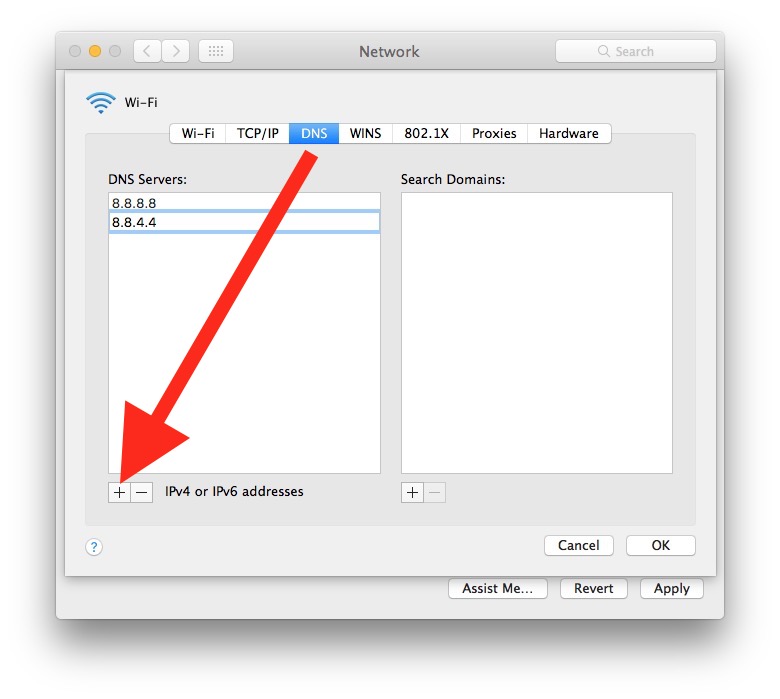
Optimize your router/ISP’s settings. Check the current setup of your router and tweak DNS settings if necessary. Unfortunately, ISPs don’t always come with the DNS configs that perfectly match your environment.
Scan your Mac for viruses. Sometimes, malicious programs and files on your computer can be the reason of poor Internet speed. Open CleanMyMac X > Malware Removal and the app will automatically make your Mac clean.
Regularly update software and firmware. Access Software Update via the Apple menu and see whether you might have missed a macOS update. Outdated OS as well as installing the beta versions of the new macOS may hinder the quality of your Internet. If the operating system is fine, check for the new versions of your router’s firmware.
Eliminate on-system interference. Make sure there are no “heavy” programs like virus scanners on your Mac — they may interfere with network performance.
Check your filters. Low-quality filters are another source of damage for your WiFi infrastructure, so you might need to replace them.
Fix external interference. The position of your router determines the Internet speed you get, especially if other devices located in your building rely on the same WiFi channel. We recommend to use NetSpot, an app for interference monitoring that shows you where to position a router.
Use a cable. We know, it feels like a tip from the 90s, but WiFi is actually always a bit slower than the Internet you get when you plug in directly to the modem.
Get a new modem. Very often, that’s the only fix that can help. Check with your ISP or test other providers to see whether you can get some extra speed.
And yes, don’t do any of the above until you try a restart. Power cycling — which is turning off and on your modem — is what you should begin with. Sometimes, there’s no particular reason your Internet is slow. It’s just your modem needing a fresh start.
How to get better Internet speed
When you’re satisfied with your router and it’s in the best possible location, time to analyze your wireless network. The following solutions will not only help you run a speed test, but also understand how to improve Internet speed.
NetSpot will produce a full analysis of all the wifi networks within range of your home or office and highlight any problems. It produces a heat map of your home or office and highlights ‘dead spots’ where wifi signal strength is low or non-existent. It can also advise on the best placement for your wifi router, and really useful suggestions to troubleshoot your networks.
WiFi Explorer allows you to identify conflicts with other networks, identifies signal overlaps, and provides a graph of signal to noise ratio. By maximizing the signal v noise, you can improve signal performance and speed up downloads.
One possible cause of poor wifi performance is interference from other wifi networks in your street. WiFi Explorer and NetSpot analyze how fast Internet is by analyzing those networks and let you know if they are causing a problem.
If there are lots of routers in your neighbourhood using the 40MHz spectrum, known as wide band, it can cause congestion – wide band occupies seven channels, compared with five used by 20MHz networks.In this case, switching to the 20MHz band may actually increase Internet speed by reducing interference. To do that you’ll need to access your router’s admin page in a web browser. You’ll need to consult its manual, or look for a sticker on the bottom of the router, for an IP address, username and password.
How to increase download speed on a slow internet connection
- Turn off bandwidth-hogging apps and plugins.
If you haven’t been able to improve the speed of your home broadband or wifi network, or if you’re on mobile network, you can still download faster. TripMode allows you to control which applications can download data. That means you can reserve bandwidth for apps you want to use to download and therefore download faster. - Split the downloads in threads to maximize download speed.
To splitting the downloads in threads try to use Folx, one of the most popular download managers for macOS. It has features for downloading movies, archives, or big files that allows you to split downloads into separate streams enabling faster downloads. - Schedule downloads.
One way to speed up downloads is to schedule them for a time when your ISPs network is less busy. Peak times are usually early evening through to around midnight, so use Folx to schedule downloads for the early hours of the morning. Some ISPs also throttle bandwidth for some users during peak hours, so downloading when it’s less busy is a very good idea.
How to download torrents faster
Despite the negative publicity BitTorrent has had in recent years, there’s nothing illegal in using it or in downloading torrents. As long as the content you download isn’t protected by copyright or, if it is, you have permission from the rights owner to take it, you’ll be fine. What’s more, it’s totally safe to use selected third-party tools to increase upload speed on torrent.
Additionally to Folx download manager it is also a torrent client. It has several features to make torrent download faster.
- Check seeds and peers.
Folx has its own built-in torrent search engine, so you don’t need to use a web browser. When you search for torrents in Folx, it will display the number of available seeds for each result. The more seeds, the faster the download is likely to be, so choose a torrent with lots of seeds. - Limit upload speeds and speed up torrent downloads.
Torrent clients upload files as well as download them and so the bandwidth available for a torrent client like Folx is used for both. If you limit upload speeds, you can make download speeds faster. You can also limit download speeds for browsers on your Mac, making more bandwidth available for torrents. To limit upload and download speeds, open Preferences in Folx and click on the Smart Speed tab. Of course, if you want to improve upload speed, you can limit download speeds instead. - Check port number.
Many torrent clients use port numbers 6881-6889. ISPs know this and some of them throttle bandwidth to those ports, which can make download speeds slow. In Folx Preferences, in the Torrents tab, check the port number and make sure its outside that range. If the port is showing as ‘in use’ click ‘Randomize port’ to choose another. - Prioritize downloads.
If there’s one download you want more than the others that are downloading at the same time, right click on the other downloads and use the ‘Limit Speed’ option to cap their download bandwidth and increase torrent download speed for your file.
How to speed up Chrome downloads
There are a number of things you can do to boost up Google Chrome’s speed:
- Limit Extensions. Browser extensions can be very useful but they eat up memory and can be reason of getting slow download speed on browser.
- Don’t have lots of tabs open. Web pages in tabs use resources like memory and, if they auto-load, bandwidth too. Keeping tabs to a minimum will speed up your browser.
- Use a download manager extension. Folx has a smart browser extension that allows it to handle everything you download in Chrome, Safari, Firefox, or any other browser. Using that can speed things up because Folx has features, like splitting files into streams, that are designed to make things faster.
- Avoid noname extensions that promise faster downloading
There are lots of Chrome extensions that promise to make the browser download faster. However, many of them don't work and causes Chrome run more slowly, don’t download the complete file, or, worse, are infected with malware. So, they are best avoided.
Downie does a similar job, even allowing you to down; pad 4K-resolution videos from streaming video and social media sites. Just copy and paste the URL for the video page into Downie or use its browser extension. Once you’ve downloaded the video, you can use Permute to convert it to any format you want.
Slow Download Speed Using Ethernet Cable On Macbook Pro 13' Mid 2010 Battery Replacement
Watch and download video at the same time
If you’re downloading videos from streaming sites, Elmedia Player can help. It has a built-in browser and download manager. Paste the URL for the video into the address bar in the downloader, then when it displays a list of all the files it’s found on the page, click Download next to the one that corresponds with the video file.
To view videos you’ve downloaded, click on the Downloads tab and press Play next to the one you want to watch.
Android nougat download s5 with a macbook pro.
If all else fails, check with your broadband provider
- Check whether your broadband provider has a fault
- Check whether wired instead of wireless can improve speed
Check that your broadband provider hasn’t reported a fault in your area by calling its helpline number.
Once you’ve ruled that out you need to find out whether the problem is your wireless network or is caused by your router failing to connect to the broadband network. If you have a Mac that has an Ethernet port or you have a USB to Ethernet adapter, connect it directly to an Ethernet port on your router to try speed up your Internet. If your download speed is much faster when connected by Ethernet, your wireless network may be the culprit.
Fortunately, there are lots of things you can do to troubleshoot and improve the speed of your wifi network.
Meantime, prepare for all the awesome things you can do with Setapp.
Read onSign Up
First things first: Now that we’ve Apple’s macOS 10.14 (Mojave). If your iMac is running an older macOS version, we recommend you upgrade. Here are several important things to prepare your Mac for macOS Mojave.
Beach balls belong at the beach — which is probably why Mac’s loading cursor has been “lovingly” nicknamed the spinning beach ball of death. Whether you call it the beach ball or the pinwheel, it certainly doesn’t make you feel like you’re at the beach.
So are you seeing that cursor more often with your iMac? And you wondered why your Mac is running slower?
The longer you’ve had your computer, the more likely it is that your iMac is going to suffer performance issues — but even newer models can seem to slow down at times. So what gives?
There’s actually a number of different reasons out there — but don’t let them discourage you.
By pinpointing the likely culprits, you can find the simplest ways to solve the issue and get your Mac machine back to its usual pace — perhaps then you can spend some time at the actual beach 🙂
In this guide, we are going to share with you those common reasons why an iMac may freeze up or run slower, and more importantly, what you can do to speed it up.
Why is My iMac so Slow?
To add to the frustration of seeing that spinning beachball, there are a number of different reasons why your Mac could be sluggish in performance, ranging from hardware issues to even simple user errors. Here are a few of the top offenders:
- Not enough disk space: with too many files crammed onto your hard drive, your iMac doesn’t have much room to breathe even if you’re holding the latest iMac with Retina 5K display and 2TB in storage.
- Too many programs open: sometimes, a slow Mac simply comes down to bad habits. If you have too many programs open, your computer won’t be able to multitask well enough to function without a reduction in speed. (Be honest, how many programs do you have running right now?)
- Outdated software: when Apple releases a new software update, the upgrade often offers an improvement in speed. At the same time though, some updates have been known to cause speed issues, instead of fixing them, like many users are experiencing with macOS High Sierra and now Mojave.
- Outdated hardware: old hardware can’t always keep up with the demands of new technology, including new operating systems, new applications and even simply new high-resolution graphics.
- Adware or malware: while a Mac may not be subject to viruses to the extent of a PC, there are a few bugs that can affect your computer’s performance. Never install applications like MacDefender that promise to keep viruses at bay — they are actually bugs themselves. If you downloaded MacDefender, uninstall it immediately.
- Bad computer habits: while habits are usually hard to break, this one is actually one of the simplest issues to fix. Bad habits like having too many start-up programs, using the wrong web browser, and leaving files and programs directly on the desktop can all slow down your computer.
Slow Download Speed Using Ethernet Cable On Macbook Pro 13' Mid 2010 Specs
Any of those issues sound familiar to you? Good — if you can pinpoint the cause, it’s a bit easier to discover how to fix it.
Still not sure? Don’t worry, there are some more hints below as to what solutions may work best for you.
1. Improve Overall Performance with Better Computer Habits
The first thing any Mac users should do when that spinning beach ball starts popping up too often is take a look at how the computer is being used. Ask yourself these questions:
- How much hard drive space do I have left? Click on the Apple logo, then About This Mac and then navigate to the Storage tab to see how much free space you have on your iMac.
- How many apps are you running currently? Always close out apps that you aren’t using.
- What apps are causing the most issues? Open the Activity Monitor, then click the CPU column to arrange your applications by how much work your computer has to do to use them.
Sound familiar? Thankfully, there are a few easy fixes that improve your Mac’s overall performance.
First, clean up your hard drive.
Use an external drive to save files you don’t access very often, like older family photos or videos. Uninstall any applications that you don’t use any more. Even clearing out your bookmarks will help. If you prefer the easy way, you can use CleanMyMac, an app that automatically searches for system junk and unnecessary files and removes them with one click.
Second, look at the apps you are using.
Programs that essentially do the same thing can be drastically different in terms of speed. Firefox tends to be much slower than Safari. In general, third-party apps tend to run slower than native Apple programs. For example, using Microsoft Word instead of Pages may make your iMac run slower.
Then, clean out your desktop and dock.
This can also improve your computer’s performance. Instead of storing files and apps directly on the desktop, leave them on the hard drive and use a shortcut icon for the desktop.
Download older version fl studio mac. Some slow issues can also be improved by resetting the non-volatile random access memory (NVRAM), helping to free up some of the active memory your Mac machine uses. Apple has a detailed guide here. Clearing out the system management controller can help too — the process is as simple as turning the iMac off and also unplugging from the outlet.
2. Optimize iMac Startup Speed
Macs run fine most of the time, but acting more Tortoise than Hare when powering up? There are a number of issues that can cause your computer to start up slow even freeze to death. For example, when your computer is trying to start several programs at once, performance suffers. There are a few ways to fight off that start-up sluggishness.
The easiest way to manage Mac startup items is by using MacBooster (via the “Startup Optimization” feature, there you just select the items you don’t want to start up and click “Disable”, that’s it). By the way, the software does a number of things to keep your iMac in good shape.
Slow Download Speed Using Ethernet Cable On Macbook Pro 13' Mid 2010 Specs
If you’re a power user, it’s also relatively easy to get that done manually. First, reduce the number of programs that start automatically. These settings are available in System Preferences > Users & Groups. Don’t see some of the start-up programs there? Click on the app on the dock, then under options uncheck “Open at Login”. When shutting the computer down, make sure to also uncheck the box that says “Reopen windows when logging back in” or you’ll still have several programs running at startup.
Second, make sure that your computer isn’t working harder at the start by disconnecting any accessories. Leaving an external hard drive, SD card or even a printer plugged in at startup will slow down the process. Finally, make sure you are still using good computer habits. Keep your hard drive clean, and give your Mac a check up occasionally by looking at the system report.
3. Fix iMac Frozen and Crash Issues
Sometimes the issue isn’t that the machine itself is slow, but that it’s not running at all with frequent freezes and crashes. First, determine if the issue happens only when you are using a certain app or only when you have a certain accessory (like a hard drive or printer) plugged in, or if it happens universally across several different tasks.
If the issue seems to be an app, check the manufacturer for updates and install them, since many will include bug fixes that prevent crashes. If you are still having trouble, contact the application developer with specific details to try to resolve the issue.
But, if the crashes aren’t happening when you are using a certain program, it’s likely an iMac issue. First, make sure you have enough space on your hard drive, once again you can use CleanMyMac to free up more disk space. If your iMac has stored a lot of duplicate files like copies of photos and backups, remove or transfer them by using this smart duplicates finder called Gemini.
Also, close any applications you aren’t using. If the issue persists, use Disk Utility to check for any errors from your start-up disk. You can also use Apple Diagnostics to help identify persistent errors.
4. Speed up Slow Internet Connection on iMac
Apps running fine, but internet crawling? First, run a speed test to see if it’s your network provider or the computer that’s causing the issues with a tool like Wi-Fi Explorer. Once you’re satisfied you are getting the speed you are paying for, make sure the router isn’t the issue — try moving it closer to your computer for a better connection. Use Wi-Fi Explorer again to see if your iMac picked up on any of the issues.
Next, check if you’ve been caught up by some Adware, a new type of malware that does not do much harm but displays flash ads when you surf the Internet. That could slow down your browsing experience, even crash your web browser. How to fix it? You can try a lightweight security app like Norton Security for Mac to scan and remove any threats it would find.
A slow internet connection can also be caused, again, by bad computer habits. What web browser do you use? Safari is optimized to run on Mac, and you will likely have more issues with Firefox, Chrome and other browsers. If you already use Safari, do some spring cleaning by emptying the cache (Safari > Empty Cache) and refreshing the history (History > Clear History). Or, you can go into the Safari menu and choose reset to restore the factory defaults.
One more way to speed up your internet connection is to reduce the number of programs that are connected to the internet. Time Machine, for example, may be set up to automatically backup your computer via Wi-Fi and can slow your connection. Apps like Mail and anything connected with iCloud will also use up your connection, so close out all the un-essentials when you need more internet speed.
5. Fix It When Your iMac is Slow after macOS Update
A macOS update should improve system crashes and speed — but that’s not always the case. Many users have reported that their computer has slowed down after updating to latest macOS (i.e. 10.14 Mojave). Initially, the system may run a bit slow as the new system needs time to update library data in certain built-in apps and the performance issues should resolve on its own after 24-48 hours.
The new user interface in macOS Mojave may also be partially to blame — while that flushing effect you see when closing apps is cool, it’s not so great for performance. You can reduce the motion and transparency effects via System Preferences > Accessibility > Display, and check the “Reduce Motion” and “Reduce Transparency” options.
6. Boost Your Old iMac with Hardware Upgrades
Technology ages in dog years — or even double dog years. If your iMac is slow and none of the above suggestions fixed the issue, you may need to upgrade your computer’s physical components, or at least compare the cost of doing so with the price of a new machine.
Two of the biggest hardware updates that will enhance your speed are upgrading the RAM and switching to an SSD from an old HDD or Fusion Drive. The computer’s RAM is where all the active applications are stored — if your RAM isn’t big enough, you won’t be able to multitask without a significant slowdown. RAM standards have increased over the years to better meet the demands of new software. Most iMacs have removable memory slots so that upgrading RAM is a simple DIY job on these models.
Solid State Drives or SSDs are about five times faster than the hard drives inside even a three-year-old iMac. Because there are no moving parts, they’re more efficient for speed and performance and run between $100 and $500. You can replace your hard drive, or run a dual hard drive and keep the original for more file storage.
Here’s a video you may find useful:
Final Words
iMacs are well-built machines — time goes on, it’s not too surprising that your Mac gets older and tends to run a bit slower. Sometimes, that’s from bad computer habits, while other cases are simply from outdated hardware. We hope you find the above fixes useful. If you have any additional questions, leave a comment below.